Aswin's Survival Guide: AI Tools For Students
J. A Anderson: The computer program does not care.
- "An Introduction to Neural Networks", Introduction (ix), 1995
Before starting this workshop, I'd like to solve some ideas people have about AI, or LLMs in general.
- LLMs are nothing more than a word machine.
It doesn't think, it just predicts the next word based on the previous words. - AI is biased.
It reflects the biases present in the data it was trained on. - AI is fallible.
It can make mistakes and should be used with caution. - AI is not only for tech-savvy people.
With proper guidance, anyone can use AI tools effectively, depending on what they're doing. - AI, at the end of the day, is a tool.
Like any tool, it can be used for good or bad purposes depending on the user.
The 4 Rules to use any AI Tool Effectively
- Give Context
- Give them a Persona
- Provide Examples
- Set Constraints
The day before your exam, when you open chatgpt or gemini, and say "Explain data types in C" its like walking upto a random person on the street (who just happens to be a CS scholar) and asking them the same question. It leaves them unprepared, lacking context.
When I sing a song to my GF, and ask her how it was, she's gonna say it was lovely or that it was really
nice.
Let's say I ask my friend Ananthu, a music producer, for feedback. He's going to give me a more
technical critique,
focusing on the key, tempo, and quality etc.
You decide whether you want the 'GF' or 'Ananthu' when you ask an LLM about something.
For example: "Explain data types in C as if you are a college professor teaching first year students."
(This rule may or may not be relevant for future models)
Set the output, don't give the AI any room for errors. When you go to a barbershop, tell him you want it short on the sides, with a little bit on top sometimes he gives you motta crap and makes you look like Vijay from friends. Instead, you could have show'ed him a photo, so he looks at it for a second and nods.
AI is a yapper and a people pleaser. Your job is to minimize the yapping. If you're looking for a specific format or length, say so. For example: "Summarize this article in 3 bullet points." This helps the AI understand your expectations better.
AI Tools for Students
- NotebookLM
- Claude
- Perplexity
- Gamma
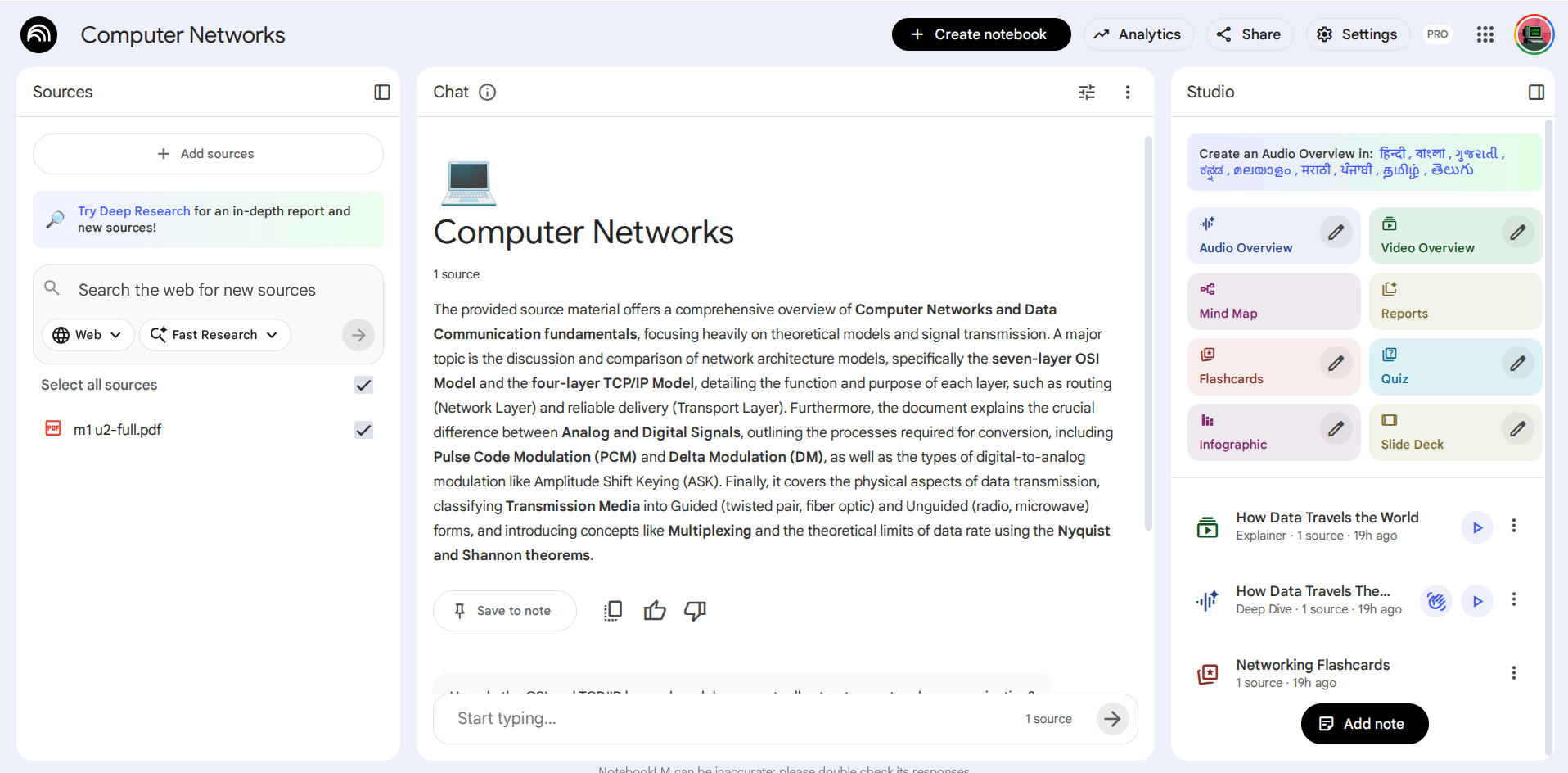
A smart notebook that helps you organize your thoughts and ideas. The overviews are good, especially video and infographics. I like plugging in government datasets and the infographics come out really nice, often revealing insights I hadn't thought of.
An AI assistant, better than chatgpt right now, for writing and brainstorming ideas. Gets rate limited more easily, but it gives more "usefulness" per token than whatever OpenAI has been doing for a while.
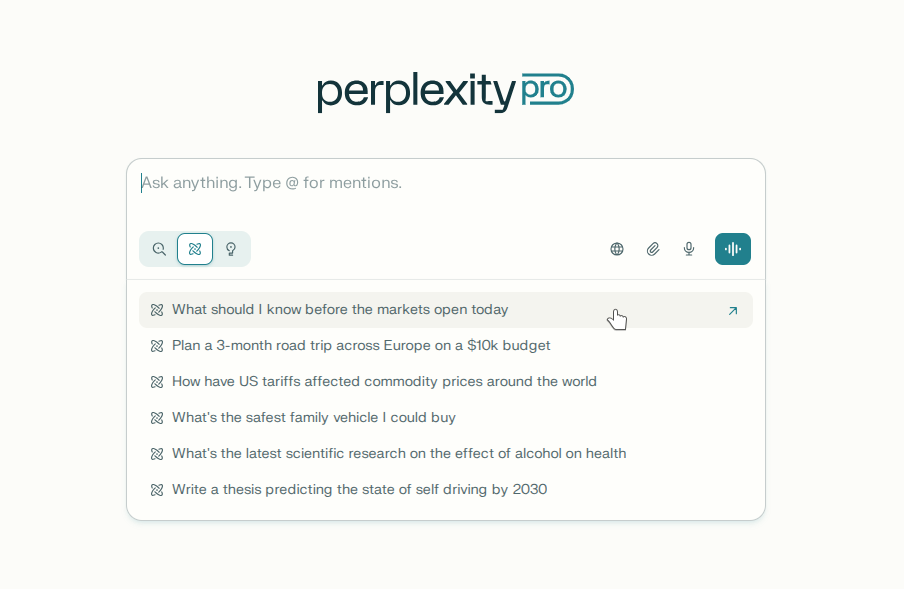
Search engine + LLMs that helps you explore complex topics and find answers quickly.
Ex: "What should i know before the markets open today?"
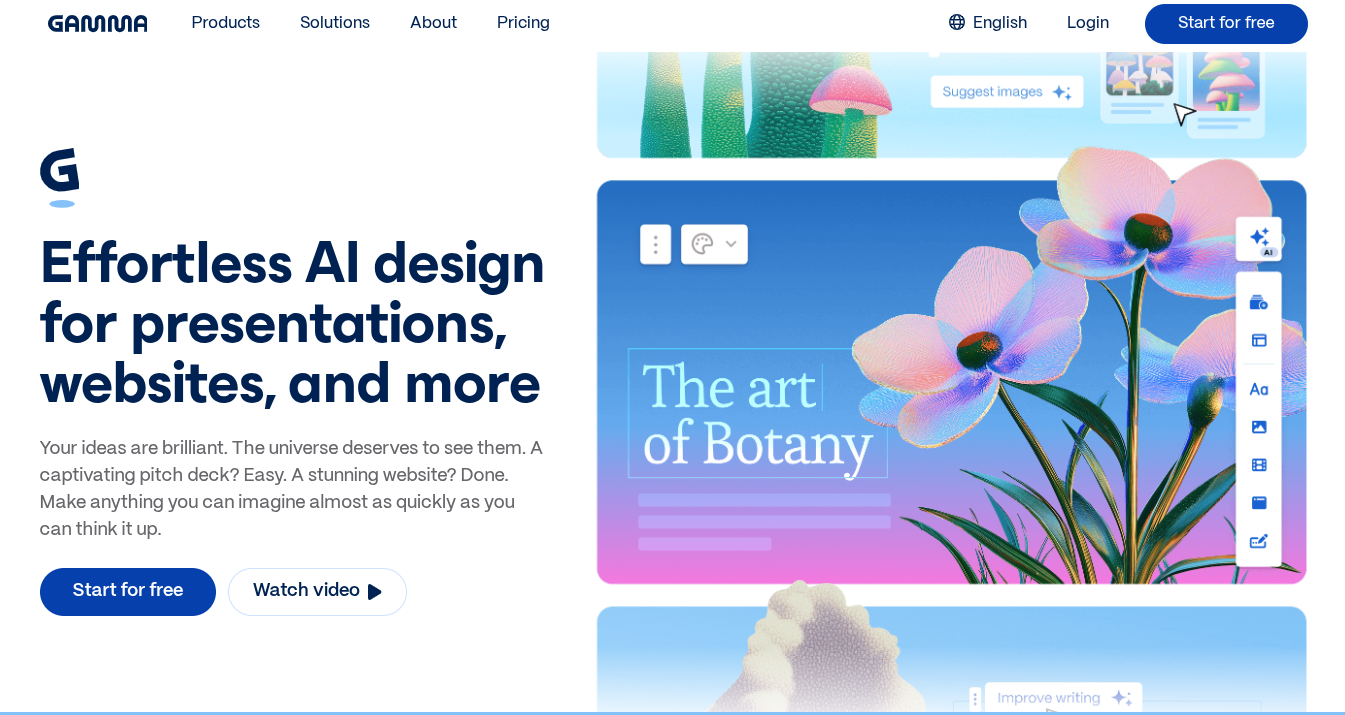
An AI-powered platform for creating presentations and visual content. I made the presentation for this workshop here from a suggestion by Claude.
Which should tell you that using these AI tools on their own leaves little to be desired.
The key to using them effectively is to combine them with the 4 rules mentioned above.
Say you have to take a seminar on a topic you know nothing about.
You could use Perplexity to get a quick overview of the topic, then use Claude to brainstorm ideas and
structure your presentation,
and finally use Gamma to create visually appealing slides.
Split your thinking into steps, use the right tool for each step, and apply the 4 rules to get the best
results.
Always experiment, reiterate, and refine your prompts to improve what you get. It's a loop of constantly
finding out what works
best with these ever-changing models.
J. A Anderson: ...because it is sometimes believed that a brainlike computing device, if we could build it, will immediately become a wonder network capable of solving all our problems. We hope to show that there is no magic in neural networks. Networks do suggest, however, a number of fascinating and useful ideas that in the long run are of more value than magic.
- "An Introduction to Neural Networks", Introduction (ix), 1995